
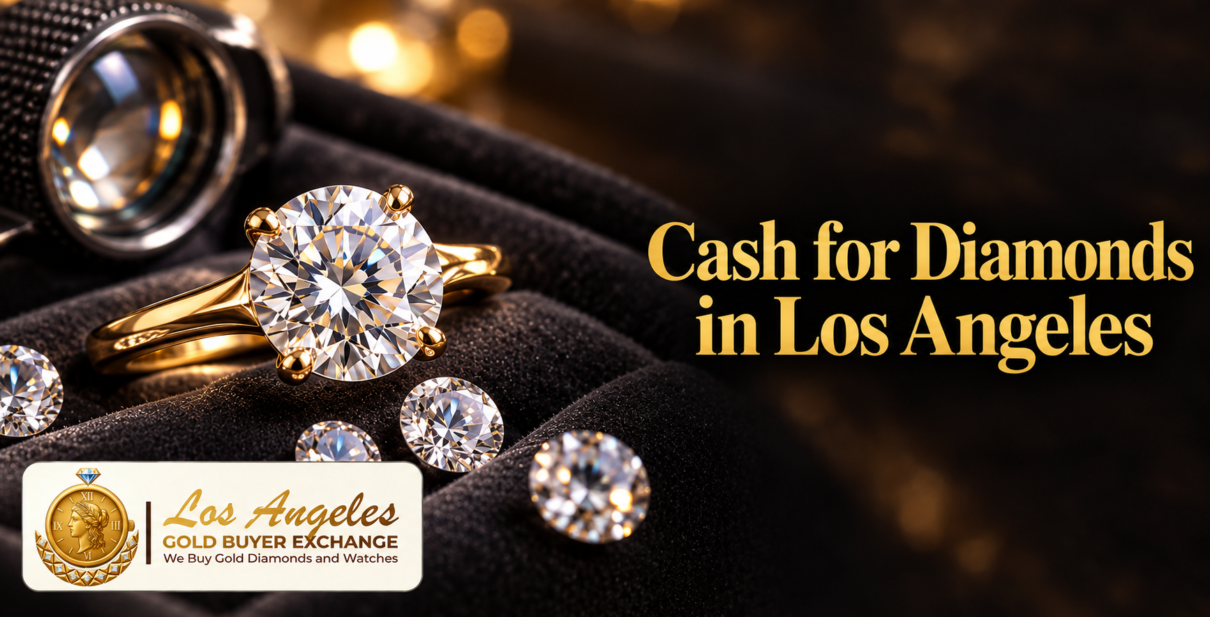
If you’re thinking about selling a diamond for cash, the first question is almost always the same: what is it actually worth? And for many people, the answer comes with a surprise. The cash offer is usually lower than what they paid at the jewelry store.
That’s not a trick, and it doesn’t mean you’re being taken advantage of. It’s simply how the diamond resale market works. Once you understand how diamond buyers arrive at a number, you can walk into any cash for diamonds business in Los Angeles knowing what to expect and which questions to ask.
In this guide, we’ll explain how the cash for diamonds industry works, what buyers look for when they evaluate a stone, and how to get the most cash for your diamond in LA.
A quick note before we start: diamond values and cash offers change with market conditions, wholesale demand, and the price of precious metals. Everything in this article is a general guide, not a price quote. The only way to know what your diamond is worth today is an in-person evaluation.
How the Cash for Diamonds Industry Works
Before you can understand your offer, it helps to understand who’s buying and why.
Who buys diamonds for cash
In Los Angeles, you’ll find several types of diamond buyers:
- Dedicated gold and diamond buyers that specialize in evaluating and purchasing jewelry, diamonds, and precious metals
- Retail jewelers, some of which buy back stones or offer store credit
- Pawn shops, which may buy outright or offer a loan against your diamond
- Online and mail-in buyers, which evaluate your diamond after you ship it
Each one prices diamonds differently, which is why offers for the same stone can vary.
Where your diamond goes after you sell it
Most diamonds bought for cash re-enter the wholesale market. They may be sold to dealers, reset into new jewelry, or, in some cases, recut to improve their appearance. Because a buyer has to resell your diamond at a profit, their cash offer is based on its wholesale value, not the retail price you see in a jewelry case.
What separates a reputable diamond buyer
A trustworthy cash for diamonds buyer will:
- Evaluate your diamond in front of you, not in a back room
- Explain how they arrived at their offer
- Base the offer on current market pricing
- Let you walk away with no pressure and no fees
If a buyer can’t or won’t explain their number, that’s a red flag. For a closer look at how different buyers compare, see our guide to pawn shops vs. gold buyers in LA.
Why Your Diamond’s Resale Value Is Different From What You Paid
The price you paid for your diamond at a jewelry store included much more than the stone itself. Retail prices cover the store’s rent, staff, marketing, brand name, and the labor that went into the setting, plus the retailer’s profit margin.
When you sell a diamond for cash, none of those costs transfer with it. The buyer is paying for the diamond and metal alone, at a price that allows them to resell it in the wholesale market.
It’s also worth knowing that wholesale diamond prices aren’t fixed. They rise and fall with supply, demand, and broader economic conditions. That means the same diamond could receive a different cash offer this month than it would have a year ago, or will a year from now.
The good news: a fair buyer will explain exactly how your offer was built, so you’re never left guessing.
The 4Cs: What Diamond Buyers Look At First
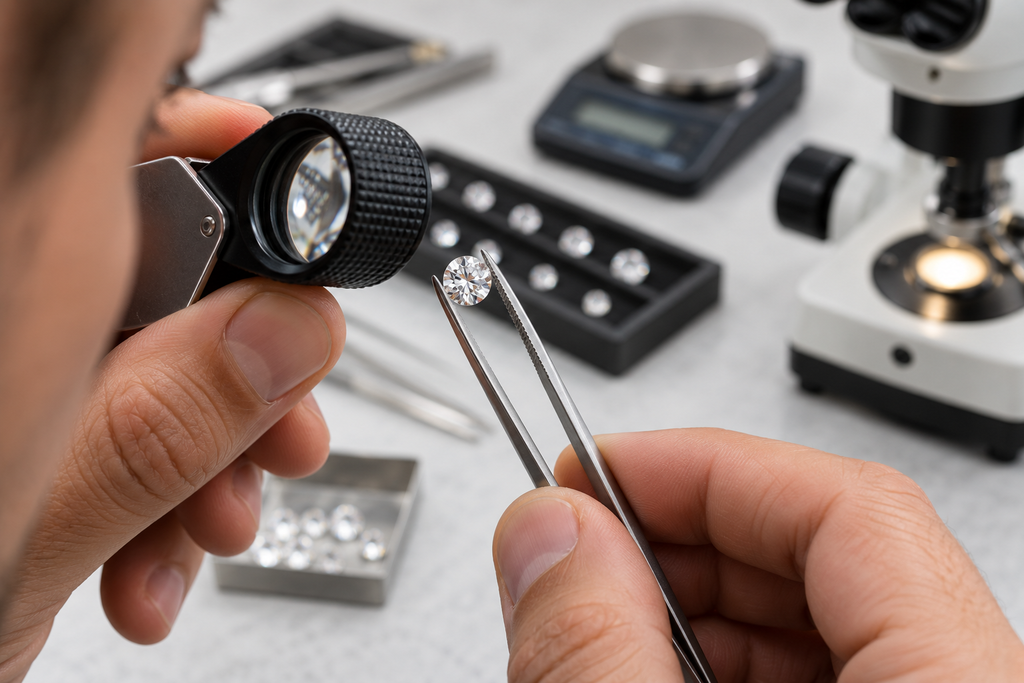
Every diamond evaluation starts with the 4Cs, the industry-standard grading system for diamond quality.
| The C | What it measures | How it affects your cash offer |
|---|---|---|
| Carat | The diamond’s weight | Larger stones are rarer, and value often jumps at popular sizes like 0.50, 1.00, and 2.00 carats |
| Color | How colorless the diamond is, graded D (colorless) to Z | Whiter diamonds are worth more; the difference is most noticeable in larger stones |
| Clarity | Inclusions and blemishes inside or on the stone | “Eye-clean” diamonds, with no flaws visible to the naked eye, are most in demand |
| Cut | How well the diamond is proportioned and polished | A well-cut diamond reflects more light and commands a stronger price |
Carat weight
Carat is the most talked-about factor, but price doesn’t rise in a straight line. A 1.00-carat diamond is often worth noticeably more than a 0.95-carat stone of the same quality, simply because buyers seek out “round number” sizes.
Color
Diamonds are graded on a scale from D (completely colorless) to Z (light yellow or brown). Most diamonds in engagement rings fall in the near-colorless range. The whiter the diamond, the higher the value, all else being equal.
Clarity
Clarity grades range from Flawless to Included. For most sellers, the key question is whether flaws are visible without magnification. A diamond that looks clean to the eye is easier to resell and typically earns a better offer.
Cut
Cut is often the most overlooked C, but it has a big impact on how a diamond looks. A well-cut stone sparkles; a poorly cut one can look dull or dark even with a strong color and clarity grade.
What Else Affects Your Cash Offer
The 4Cs are the starting point, but several other factors can move your offer up or down.
Shape
Round brilliant diamonds are the most popular shape and are generally the easiest to resell. Fancy shapes, such as oval, princess, cushion, emerald, and pear, can rise and fall in popularity, and their cash value often follows those trends.
Fluorescence
Some diamonds glow blue under UV light. Faint fluorescence rarely matters, but strong fluorescence can lower the value of certain stones, especially in higher color grades.
Chips, scratches, and damage
Diamonds are hard, but they can chip, especially along thin edges. Damage may reduce value or mean the stone needs recutting, which the buyer will factor into the offer.
Market conditions
Like any commodity, diamonds are subject to supply and demand. Wholesale diamond prices can shift based on global demand, the growth of lab-grown diamonds, economic conditions, and seasonal buying cycles. This is one of the main reasons cash for diamonds offers can change from month to month.
Precious metal prices
If your diamond is in a ring, pendant, or other setting, the gold or platinum is valued separately, based on that day’s spot price. Metal prices change every day, so the metal portion of your offer can rise or fall even if the diamond’s value stays the same.
Does Your Diamond Need a Certificate to Sell for Cash?
No. You can sell a diamond for cash without a certificate. But having one can help.
Why GIA certificates carry weight
A grading report from the Gemological Institute of America (GIA) is the most widely trusted certificate in the diamond industry. It documents the stone’s 4Cs, measurements, and any identifying characteristics. When a buyer can verify your diamond against a GIA report, there’s less uncertainty, which can support a stronger offer. Reports from other labs are also common, though they don’t always carry the same weight with buyers.
Selling a diamond without a certificate
Most diamonds, especially smaller stones and older jewelry, don’t come with paperwork. That’s completely normal. An experienced buyer will grade the diamond in person using magnification and testing tools, then base the offer on that evaluation.
Should you get a certificate before selling?
It depends on the stone. For larger, higher-quality diamonds, a certificate may be worth the cost and wait. For smaller stones, the grading fee may outweigh any increase in your offer. A reputable buyer can help you decide.
Natural vs. Lab-Grown Diamonds: A Big Difference in Cash Value
This is one of the most important things to know before selling. Natural and lab-grown diamonds look the same to the naked eye, but their resale values are very different.
How to tell which one you have
- Check your original receipt or grading report. Lab-grown diamonds are identified as such.
- Many lab-grown diamonds have a laser inscription on the girdle (the thin outer edge) noting they are lab-grown.
- If you’re unsure, a professional buyer can test the stone.
Why lab-grown diamonds have limited resale value
Lab-grown diamonds can be produced in large quantities, and their prices have fallen significantly as production has grown. Because the supply isn’t limited, there is very little secondary market for them. As a result, many buyers offer little or nothing for the lab-grown stone itself.
What to expect if yours is lab-grown
Even if the diamond has little resale value, the gold or platinum setting still does. Many people selling lab-grown diamond jewelry receive cash for the metal, based on its karat, weight, and the current precious metal price.
Your Setting Is Worth Cash Too: Gold and Platinum Value
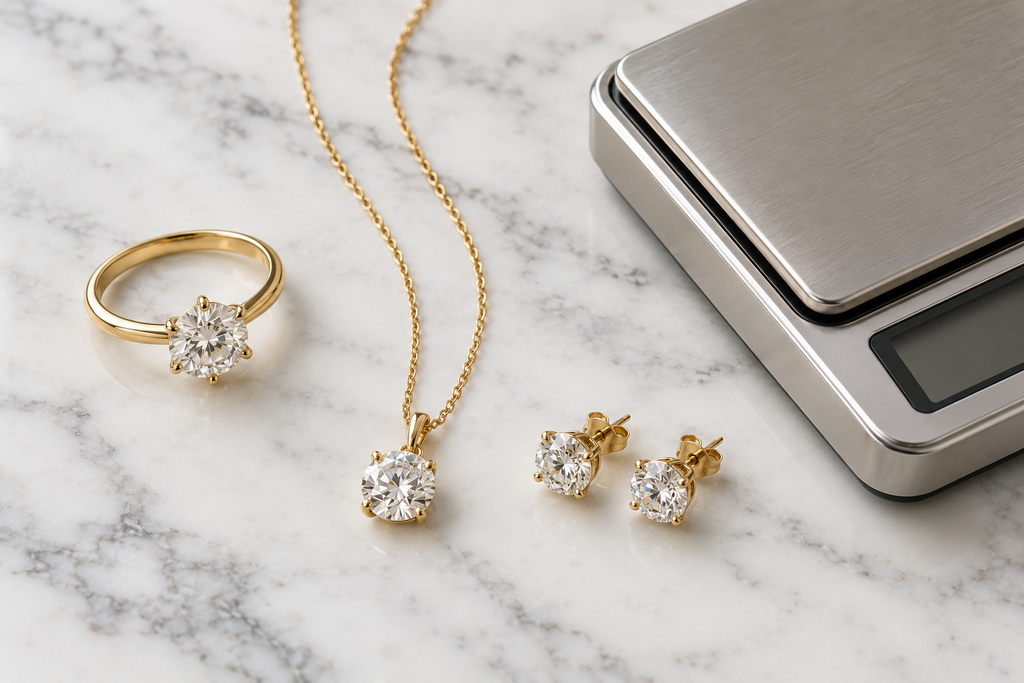
When you sell a diamond ring, you’re selling two things: the diamond and the metal. The setting is valued separately and can add meaningfully to your total cash offer.
How the metal is valued
The gold or platinum in your setting is tested for purity and weighed. For gold, purity is measured in karats (10K, 14K, 18K, and so on). The offer is then based on how much pure metal the piece contains and the current spot price of gold or platinum.
Because precious metal prices change every day, the metal portion of your offer reflects the market on the day you sell. When gold prices are high, your setting may be worth more than you expect. To learn more about how gold is priced, read What Is My Gold Worth in LA?
What about small side stones?
Many rings include small accent diamonds, called melee. These are usually valued as a group rather than individually, and they add less to your offer than a center stone. They still count, so make sure your buyer includes them in the evaluation.
How to Get the Most Cash for Your Diamond in Los Angeles
A little preparation goes a long way. Here’s how to make sure you get a fair offer.
- Bring any paperwork you have. Original receipts, grading reports, and appraisals all help a buyer verify your diamond quickly.
- Understand what an insurance appraisal means. Insurance appraisals list the retail replacement value, which is what it would cost to buy a similar piece new. They are not a measure of what the diamond is worth in cash, and are usually much higher than any resale offer.
- Ask how the offer was calculated. A reputable buyer should be able to walk you through the 4Cs, the metal value, and how current market conditions factored in.
- Get an in-person evaluation. Online estimates can’t account for cut quality, damage, or whether a stone is natural or lab-grown. Seeing the diamond in person leads to a more accurate offer.
- Compare offers. It’s reasonable to get more than one quote, especially for a larger stone. Just keep in mind that offers reflect the market on the day they’re made.
- Avoid pressure. A fair buyer will never rush you. You should always feel free to walk away.
If you’re selling a diamond ring specifically, our guide on where to sell diamond rings for cash in Los Angeles covers your options in more detail. Selling a piece you inherited? Read Selling Inherited Jewelry in Los Angeles.
Getting Cash for Diamonds at LA Gold Buyer Exchange
At LA Gold Buyer Exchange, we keep the process simple and transparent. Here’s what to expect when you bring in a diamond:
- Inspection. We examine your diamond and setting in front of you.
- Grading. Using magnification and professional testing tools, we evaluate the 4Cs and confirm whether the stone is natural or lab-grown.
- Metal testing. We test and weigh any gold or platinum in the setting.
- Your offer. We give you a cash offer based on current market conditions and that day’s precious metal prices, and explain exactly how we got there.
- Same-day payment. If you accept, you’re paid on the spot. If not, there’s no obligation and no fee.
Every offer reflects the market on the day of your visit. We’ll always tell you how we arrived at our number.
Frequently Asked Questions
How do cash for diamonds buyers calculate an offer?
Buyers look at the diamond’s 4Cs (carat, color, clarity, and cut), along with shape, condition, and whether it’s natural or lab-grown. They then factor in current wholesale diamond prices and, if the stone is set, the value of the gold or platinum based on that day’s spot price.
Why might my diamond get a different offer today than a few months ago?
Diamond and precious metal prices change with market conditions. Shifts in wholesale demand, the growth of lab-grown diamonds, and daily changes in gold and platinum prices can all move your offer up or down over time.
Why is my insurance appraisal so much higher than the cash offer?
Insurance appraisals estimate the cost to replace your jewelry at retail, including markup and labor. A cash offer reflects what the diamond and metal are worth in the resale market, which is typically much lower.
Can I sell a diamond without a GIA certificate?
Yes. Most diamonds are sold without certificates. An experienced buyer will grade the stone in person and base the offer on that evaluation.
Are lab-grown diamonds worth any cash?
Lab-grown diamonds have very limited resale value, and many buyers offer little for the stone itself. However, the gold or platinum setting still has cash value based on its weight, purity, and current metal prices.
Should I sell my diamond loose or in the ring?
Either works. Bringing the full ring lets the buyer value the diamond and the metal together in one offer. If you’d like to keep the setting, you can ask about selling the diamond on its own.
How long does a diamond evaluation take?
Most evaluations are completed during a single visit, and if you accept the offer, you can be paid the same day.
Get a Free Diamond Evaluation in Los Angeles
Thinking about selling a diamond for cash? Bring it to LA Gold Buyer Exchange for a free, no-obligation evaluation. We’ll grade your diamond in front of you, explain your offer, and pay you the same day if you choose to sell.
Contact us today to get started.
Disclaimer: All cash offers depend on current market conditions, wholesale diamond demand, precious metal spot prices, and an in-person evaluation of each item. The information in this article is for general guidance only and is not a price quote or appraisal.