
- November 15, 2026
- Gold Coins
Before you sell
Start with the material: solid sterling, silver-plated pieces and bullion need different evaluations. Keep items intact, avoid cleaning coins and compare the net offer after non-silver parts are accounted for.
Gold gets most of the attention, but silver can be worth real money too, especially when you have a lot of it. A drawer of sterling flatware, an old tea set, a jar of pre-1965 quarters or a few silver bars can add up quickly.
This guide focuses on silver. If you also have gold jewelry, our cash for gold service explains how those items are evaluated separately.
The challenge with silver is knowing what’s solid and what’s plated, and understanding how buyers set their price. This guide covers the types of silver you can sell in Los Angeles, how to identify sterling, and how cash for silver offers are calculated.
Silver prices change during market trading. Treat this article as a guide rather than a quote: your offer also depends on the items, verified metal content, condition and demand. Confirm the price and payment terms when you sell.
Types of Silver You Can Sell for Cash
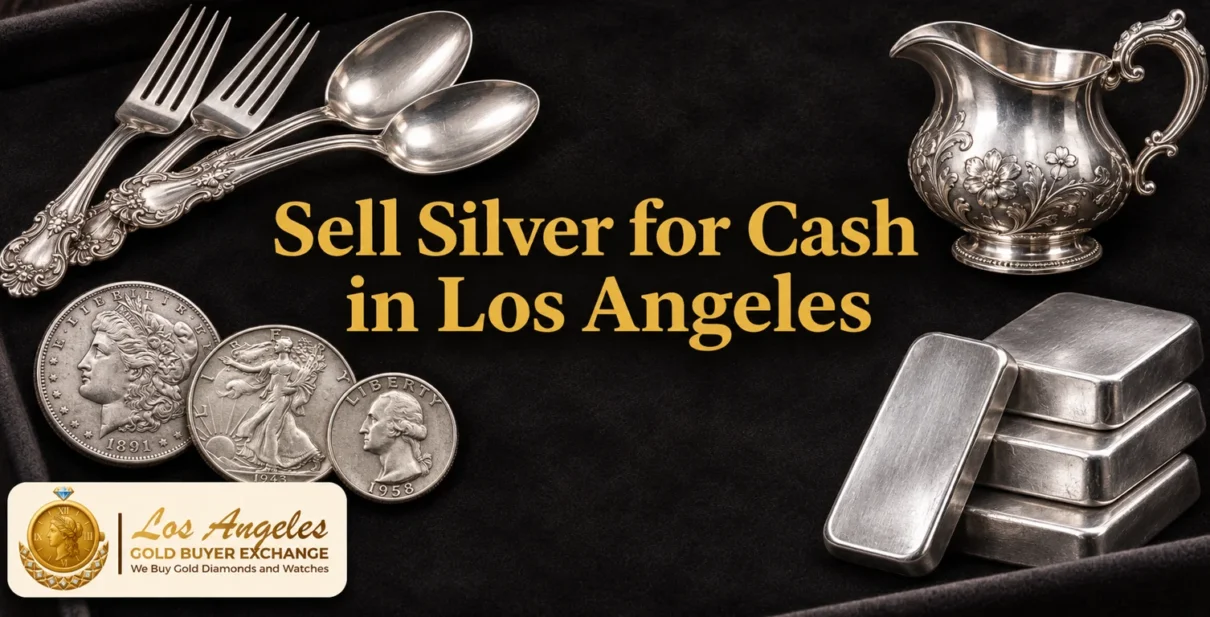
Sterling silver flatware
Forks, knives, spoons and serving pieces are some of the most common silver items people sell, often from a family set. A full service can contain a surprising amount of silver. Knives are an exception: most sterling knives have a hollow, weighted handle and a steel blade, so they contain much less silver than they appear to.
Sterling holloware
Tea and coffee sets, trays, bowls, pitchers and candlesticks fall into this category. Larger pieces can be heavy, but some are weighted or reinforced with other materials, which affects how much silver they actually contain.
Sterling silver jewelry (925)
A genuine 925 or STERLING mark indicates 92.5% silver. Rings, chains, bracelets and earrings still need verification because markings can be worn or misleading. Individual pieces may be light, so bringing several together can make an evaluation more practical.
Silver coins
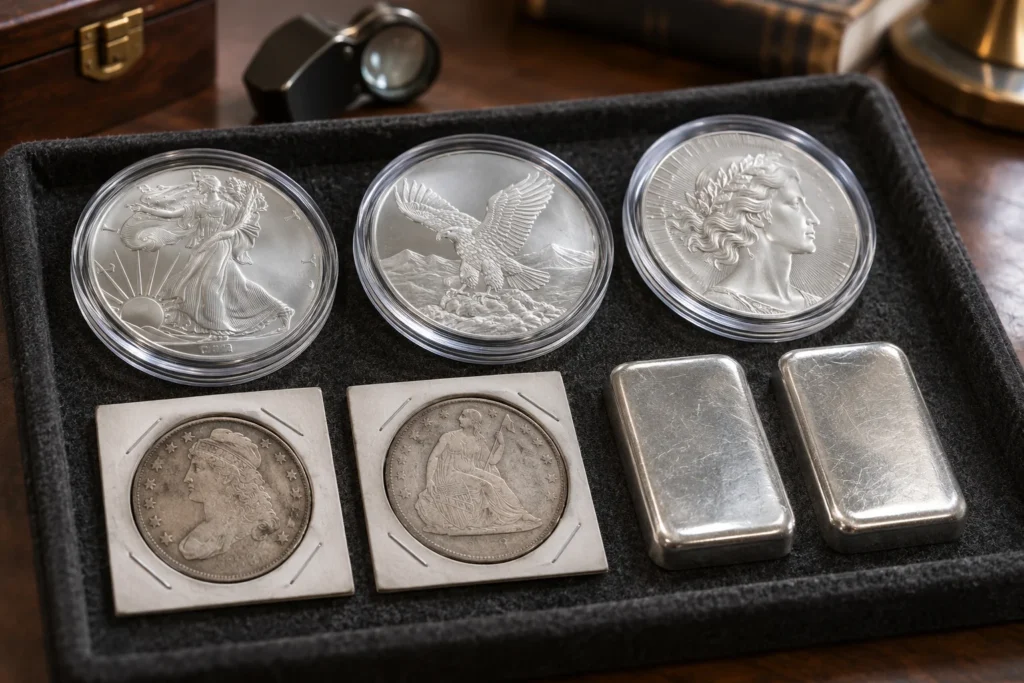
Pre-1965 U.S. dimes, quarters and half dollars, Morgan and Peace dollars, and modern bullion coins like the American Silver Eagle can all be sold. More on these below.
Silver bars and rounds
Bars from 1 oz to 100 oz, plus rounds from private mints, are typically .999 fine silver and are valued on their silver content.
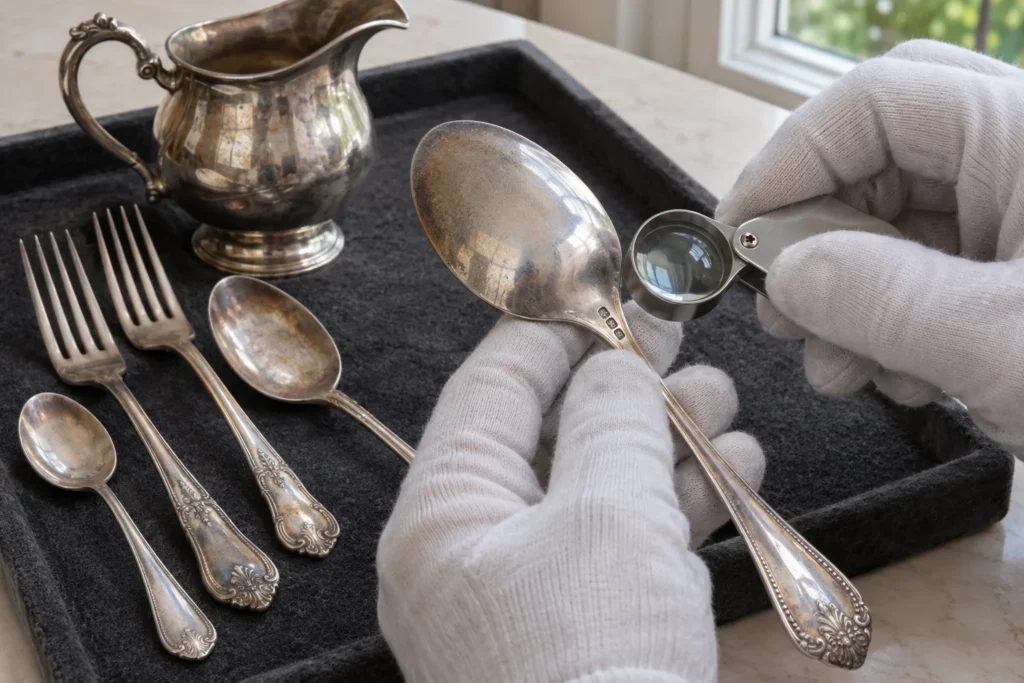
Sterling Silver vs. Silver-Plated: How to Tell
This is the most important thing to know before selling silver. Silver-plated items have only a thin layer of silver over a base metal, and they have little or no value as scrap silver.
| Look for | Likely meaning |
|---|---|
| STERLING, 925, .925 | Sterling silver: 92.5% silver |
| 800, 830, 900 | Lower-purity silver, common in European and older pieces |
| 999, FINE SILVER | Fine silver, typically 99.9% or higher; verify the stated fineness |
| EP, EPNS, A1, “Silver Plate,” “Quadruple Plate” | Silver-plated: little or no scrap value |
| A maker’s name with no purity mark | Purity unknown; a maker’s name alone does not establish silver content |
Plated pieces may show a different metal where their surface has worn, especially around handles and edges. Appearance and a magnet are only screening clues. Have uncertain items tested rather than filing, scratching or chemically treating them at home.
How Silver Is Valued
Cash for silver offers come down to three things:
- Purity. Sterling is 92.5% silver, coin silver is typically 90%, and bullion is 99.9%.
- Weight. Silver is weighed, usually in troy ounces or grams, after non-silver parts are accounted for, such as steel knife blades or weighted bases.
- The current silver spot price. You can check it on Kitco’s live silver price page, which also shows estimated metal values for 925 sterling and 900 coin silver.
Why a silver offer can change
The market price used for an offer can differ from one visit to the next. Product demand, the identified purity and the amount of recoverable metal also matter. If a quote changes, ask which input changed rather than assuming the market explains the whole difference.
Why offers are below spot value
Spot-based metal value is a benchmark, not a promised payout. Buyers account for testing, refining where needed, handling, resale costs and market risk. Recognized bullion or collectible pieces may be priced differently from mixed sterling scrap. Ask for the net offer and any deductions before agreeing.
Selling Silver Coins
“Junk” silver: pre-1965 U.S. coins
Common U.S. dimes, quarters and half dollars dated 1964 and earlier generally contain 90% silver. The trade term “junk silver” usually describes common circulated pieces bought mainly for metal, not a verdict on every coin. Kennedy half dollars dated 1965–1970 contain 40% silver. Some wartime nickels also contain silver, but not every 1942 nickel does; the mint mark and composition need checking.
Morgan and Peace silver dollars
Original Morgan and Peace dollars are 90% silver and were issued during portions of the period from 1878 through 1935. Common dates may trade mainly on silver content, while rarity, mint mark and condition can add a premium. Modern Morgan and Peace releases are different products; identify the issue before using a metal calculation.
American Silver Eagles and other bullion coins
The U.S. Mint specifies one troy ounce of .999 fine silver for American Silver Eagle bullion coins. Other bullion products can have different fineness, weights and resale premiums. Identify each product rather than assuming every silver-colored coin contains an ounce.
Do not clean coins. Keep original holders, tubes and grading information together, and ask whether collector demand affects the offer. Our gold coins and bullion page explains the distinction between metal content and additional collectible value.
Tips to Get the Most Cash for Your Silver
- Separate sterling from plated. Check every piece for purity marks before you go. It saves time and sets realistic expectations.
- Don’t polish or clean. Polishing won’t raise the silver value, and it can ruin collector value on coins.
- Look for designer or antique pieces. Pieces from well-known silversmiths or rare patterns may be worth more than their silver content.
- Keep sets together. A complete flatware service is easier to evaluate, and some patterns have resale value as sets.
- Check the silver price before you sell. It gives you context for the offer.
- Watch the weighing. Your silver should be tested and weighed in front of you on a certified scale.
- Bring gold and silver together if you want both evaluated. Keep the metals separate so the weights, purity and offers can be explained independently.
- Bring valid government-issued photo ID and ask the buyer about the documentation needed for your transaction.
Sorting through a family estate? Selling Inherited Jewelry in Los Angeles has more tips.
Selling Silver at LA Gold Buyer Exchange
LA Gold Buyer Exchange has bought precious metals in Los Angeles since 2011. Along with gold, diamonds and watches, we buy sterling silver, silver coins and bullion.
- Bring your silver and a photo ID. No polishing or sorting needed.
- We identify and test. We check purity marks and confirm silver content using non-destructive methods.
- We weigh in front of you on state-certified scales.
- You get a clear offer based on today’s silver price, with any collector value explained.
- Same-day payment if you accept, with no obligation if you don’t.
Have gold too? Learn about our cash for gold service, scrap and broken gold and gold coins and bullion.
We serve North Hollywood, Vermont Square, Walnut Park, Pacoima and other Los Angeles area neighborhoods. Browse our locations page for the address and map of a convenient store.
A simple sterling silver weight example
Suppose a group of verified sterling spoons has 500 grams of eligible metal weight. Multiplying 500 by 0.925 gives 462.5 grams of fine silver. That is a metal-content calculation, not a cash quote. To compare it with a market price, use the same weight unit and then ask how the buyer arrives at the final purchase offer.
A troy ounce is approximately 31.1035 grams, different from an ordinary household ounce. If your kitchen scale uses ordinary ounces, do not multiply that reading directly by a price per troy ounce. The buyer should identify the unit used, explain non-silver components and show the relevant weight.
That example does not work for a weighted candlestick or a knife weighed with its steel blade. The entire object is not sterling silver. Do not break apart inherited pieces to estimate their contents yourself: first ask whether the object has value as a complete antique or usable item.
Do not mistake shine for silver content
Tarnish does not establish purity, and a shiny finish does not prove an item is plated. Photograph the marks and bring uncertain pieces intact. A genuine sterling mark is helpful evidence, while testing, construction and the maker’s marks provide the rest of the picture. This is especially useful when several generations of flatware have been mixed into the same drawer.
Frequently Asked Questions
Yes. Sterling forks, spoons, serving pieces and full sets are valued by their silver content. Knives are evaluated separately, because most have steel blades and weighted handles.
Silver-plated items have very little silver and usually have little or no scrap value. Some plated pieces have resale value as decor, but not as precious metal.
Look for marks like STERLING, 925, 900 or 800. Marks like EP, EPNS or “silver plate” mean the item is plated. If there’s no mark, testing will confirm it.
Most familiar U.S. circulating dimes, quarters and half dollars dated 1964 and earlier contain 90% silver and can have metal value above face value. Identify the date, type and authenticity, and check for collector value before accepting a bulk quote.
Silver offers are based on the silver spot price, which can move sharply over short periods.
Yes. Bring everything at once. Each metal is tested, weighed and priced separately, then combined into one offer.
Walk-ins are welcome. Call ahead for heavy flatware sets, large coin collections or special payment arrangements so the selected store can confirm what to bring and allow enough time.
Turn Your Silver Into Cash Today
From a single sterling bracelet to a full tea service or a bag of old coins, LA Gold Buyer Exchange will test and weigh your silver in front of you, explain your offer and pay you the same day if you choose to sell.
Call (323) 434-0305 before bringing heavy sets or a large collection, or contact us with questions.
Disclaimer: All cash offers depend on the current silver spot price, verified purity and weight, collector demand and an in-person evaluation of each item. The information in this article is for general guidance only and is not a price quote or appraisal.